Which Element Matches Your Energy?
Fire, earth, air or water — which one actually describes how you move through life?
More Quizzes
What This Quiz Looks At
The four elements — fire, earth, air, and water — are the oldest layer of astrological description and the one that sorts temperaments most efficiently. This quiz asks about how you approach decisions, conflict, other people, and unfamiliar situations, then reports which of the four your answers lean toward.
It is a tally rather than a measurement. Each answer carries weight toward one or more elements, and the result is whichever accumulates most. Nothing is stored, nothing is submitted, and the same answers will always produce the same outcome.
What Each Element Describes
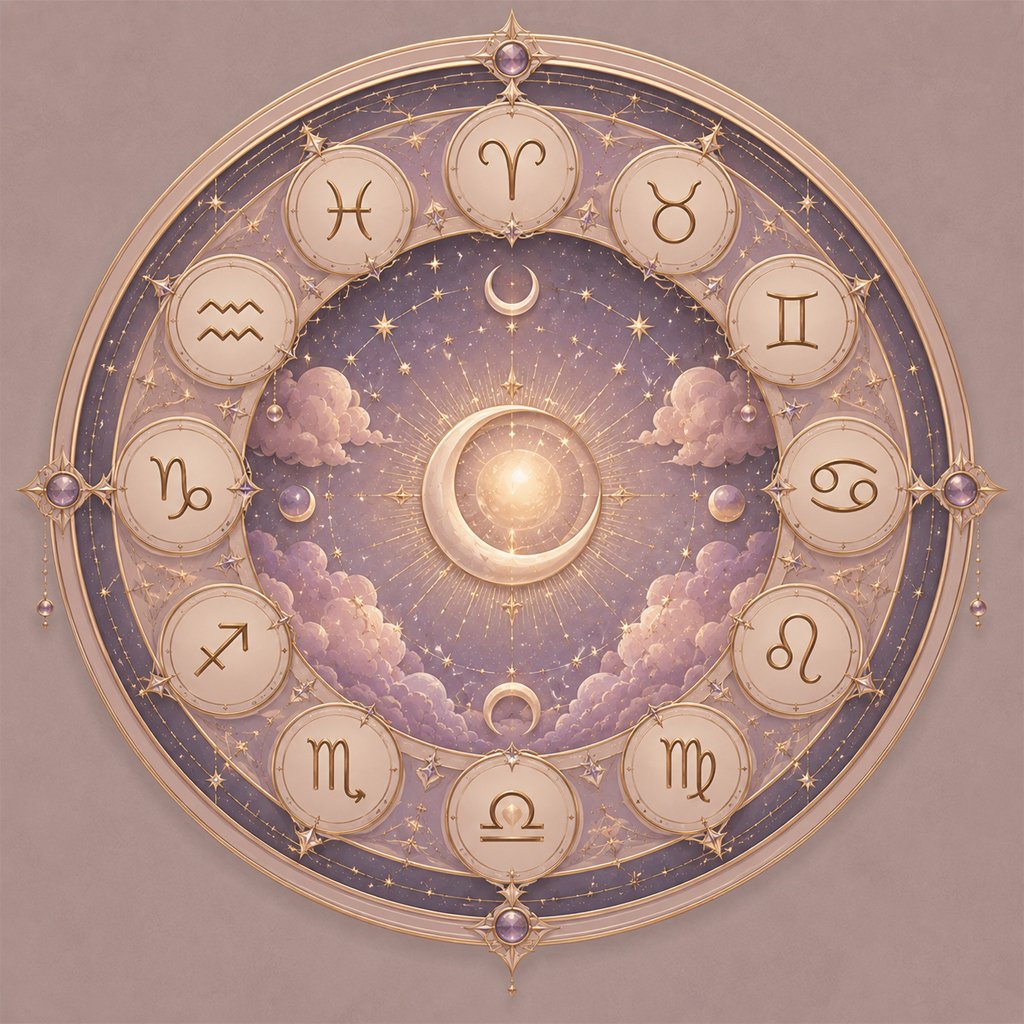
Fire — Aries, Leo, and Sagittarius — describes initiative and self-expression. Fire temperaments commit quickly, recover from setbacks faster than others expect, and lose interest once something becomes maintenance rather than momentum.
Earth — Taurus, Virgo, and Capricorn — describes consequence. Earth measures an idea against whether it will hold: what it costs, who maintains it, and whether it survives contact with a calendar. Reliability is the strength and inertia is the cost.
Air — Gemini, Libra, and Aquarius — describes perspective, processing through comparison and language. Water — Cancer, Scorpio, and Pisces — describes atmosphere, registering the emotional temperature of a situation before its content.
If The Result Is Not Your Sign's Element
This happens frequently and does not indicate an error in either direction. Your sun sign belongs to one element, but a full chart distributes ten planets across all four, and the balance between them is often quite different from what the sun alone suggests.
A Capricorn with the moon in Pisces and Venus in Scorpio has a chart weighted toward water despite an earth sun, and will very reasonably answer a temperament quiz as water. That is not a contradiction; it is the chart being more detailed than the sun sign.
The elements guide explains how to read that balance across a whole chart, and the natal calculator will show you what yours actually looks like.
Why Elements Are Worth Knowing
Of everything in astrology, the elements are the layer that transfers most usefully into ordinary description. Knowing that someone is a fire temperament tells you more about how they will behave in a meeting than knowing their exact Mercury placement does, and it takes a fraction of the effort to learn.
They also describe compatibility more honestly than sign-by-sign lists. Fire and air tend to accelerate each other; earth and water tend to steady each other. Cross-element pairings are not doomed — they simply describe where two people will have to translate for one another, which is a more useful thing to know in advance than a compatibility score.
Reading The Result
This quiz is entertainment and carries no assessment value. It cannot tell you your sign, does not measure personality, and should not inform any decision about work, relationships, or how to understand another person.
What it can do is point you somewhere worth reading. The elements guide covers all four in depth, including how they combine and what an element missing from a chart entirely tends to indicate — which is one of the more interesting things the framework has to say.
The Elements In A Whole Chart
A quiz returns one element because it has to return something. A chart returns a distribution, and the distribution is where the interesting reading is. Most people have planets in all four elements, and the balance between them describes a temperament far more precisely than any single answer can.
A chart heavy in earth and light in air describes someone practical who may under-communicate. One heavy in fire and water describes enthusiasm and sensitivity together, which is a demanding combination to hold steady. Neither of those is a category a quiz could offer as an option.
An element missing altogether is worth noticing and not worth worrying about. It usually indicates a quality the person had to build deliberately rather than inherit, and deliberately built qualities tend to be the more reliable ones — someone with no earth is not incapable of being practical, they simply had to work out a method for it.
Where The Four Elements Came From
The scheme predates astrology in its current form by a considerable margin. Fire, earth, air, and water were used in classical Greek thought as an account of what the physical world was made of, and the association with temperament followed from the medical theory of the same period.
That older framework matched each element to a bodily humor and a corresponding disposition — choleric, melancholic, sanguine, and phlegmatic. The physiology has been abandoned entirely, but the four temperaments survived the theory that produced them and are recognizably the same four this quiz reports.
It is a useful reminder of what the elements are: a very old scheme for sorting people into four broad kinds, which has lasted because the sorting is genuinely serviceable rather than because anything underneath it turned out to be true.
Common Questions
Does this tell me my sign? No. It reports an element, which covers three signs, and it is working from your answers rather than your birth date. The zodiac sign calculator in the tools section is the one that answers that question properly.
Is one element better than another? No, and the tradition does not rank them. Each describes a different set of strengths and a corresponding set of costs, and every chart contains some of all four.
Are my answers stored anywhere? No. The quiz runs entirely in your browser, nothing is transmitted, and no result is retained once you leave the page.