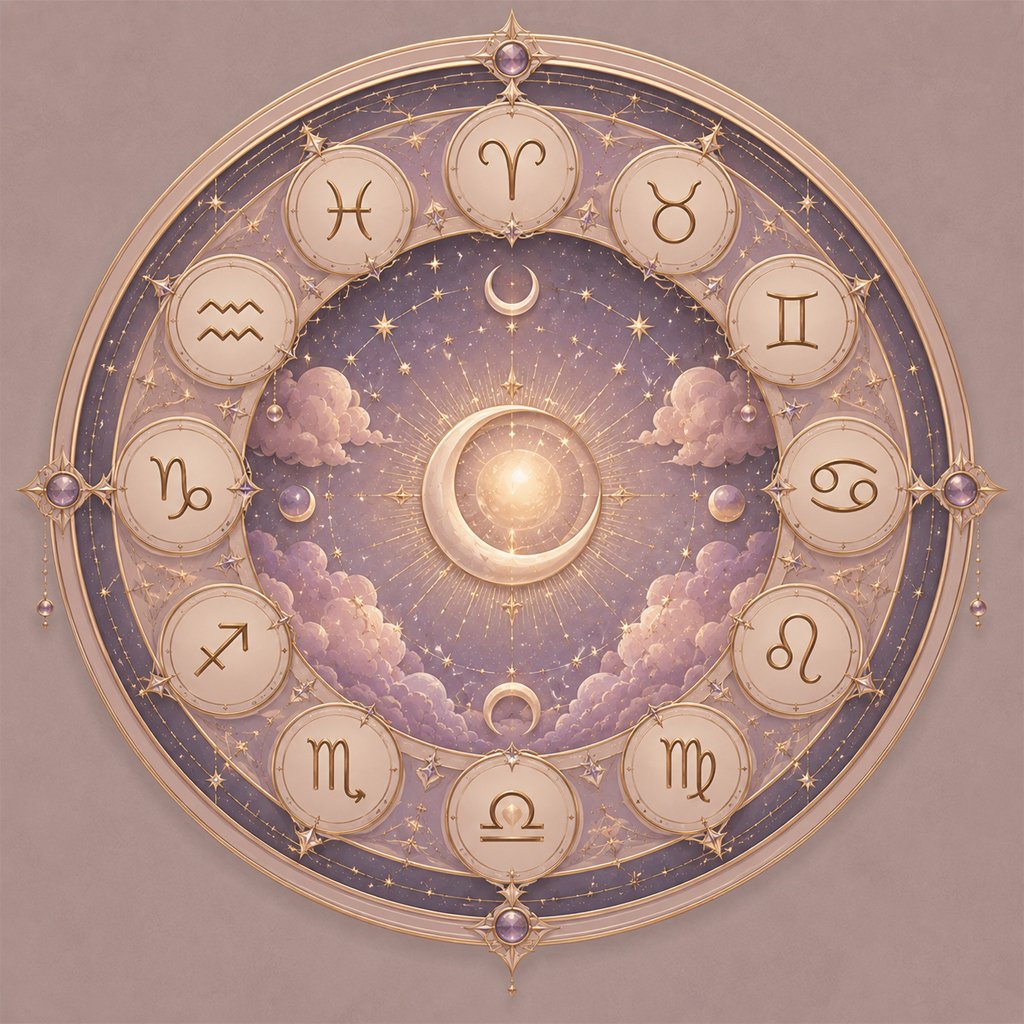
The guides collected here are the longer, explanatory pieces on this site — the material that sits behind the daily horoscopes and the calculators. Where a horoscope gives you a single day's reading and a calculator gives you a result, a guide explains the system the reading came from, which is what makes the rest of it usable rather than simply consumable.
They fall into a few broad groups. Some cover the structural parts of astrology: the elements, the modalities, the planets, and the houses, each of which is a layer of the same chart. Some cover the twelve signs in depth — temperament, compatibility, and how a sign behaves under pressure rather than at its best. Others deal with the practical questions people arrive with, such as what a rising sign is, why a birth time matters, or what a retrograde does and does not mean.
None of them assume prior knowledge. Where a piece depends on a concept covered elsewhere, it links to the guide that explains it rather than compressing an explanation into a sentence that would not hold.
If you are starting from scratch, the fastest route to something useful is the four elements, then the three modalities. Between them they account for the twelve signs completely: each sign is the unique intersection of one element and one modality, and once that clicks, the individual sign descriptions stop being twelve unrelated lists to memorize.
From there, the planets are the natural next step, since they describe what is actually being placed in a chart, and the houses after that, since they describe where those placements land. That order matters — houses are difficult to make sense of without knowing what a planet represents, and straightforward once you do.
Readers who already know their sun sign well and want more usually find the rising sign and the moon sign the most rewarding place to go next. Those two placements explain most of the gap between a sun sign description and the person reading it, which is the single most common reason people conclude that astrology does not describe them.
Astrology is treated here as a symbolic language rather than a mechanism. The guides describe what the tradition says, where the conventions come from, and where practitioners disagree with each other — and they say so plainly when a claim is folklore rather than an established part of the system.
That means a certain amount of hedging that other sites do without. Where two house systems produce different answers, both are named. Where a modern convention differs from a classical one, the difference is stated rather than smoothed over. Where something commonly asserted has no basis, such as the idea that a retrograde causes equipment to fail, the guides say that directly.
Nothing here is predictive, and nothing here is advice. Astrology cannot tell you what will happen, and no reading on this site should be used to make decisions about health, money, legal matters, or relationships. What it offers is a vocabulary for describing patterns — which is genuinely useful for thinking with, and useless as a substitute for thinking.
The system these guides describe is old and assembled from several sources. Its earliest recognizable form is Babylonian, where planetary positions were recorded for the purpose of reading omens about the state rather than about individuals. The shift to personal charts came later, in the Hellenistic period, along with most of the structure still in use — the twelve houses, the aspects, and the rulership scheme.
It passed into Arabic scholarship, returned to Europe through translation in the medieval period, and was substantially reorganized again in the twentieth century, when psychological readings of the chart replaced the older predictive approach. The version most people encounter today is that modern layer sitting on a very old frame, which is why it occasionally contains two answers to the same question.
Knowing this history makes the disagreements easier to navigate. When two sources conflict about rulership or house division, it is usually not that one of them is wrong — it is that they are working from different periods of a tradition that has been revised more than once.
The three kinds of content on this site answer different questions, and they are most useful in combination. The tools calculate: they take a birth date, and where necessary a time and place, and return positions that are either correct or not. There is no interpretation involved in a sun sign calculation or a Chinese year lookup, which is why those results are stated plainly.
The daily horoscopes are the opposite kind of writing. They take a single placement, apply it to a day, and are best read as a prompt for reflection rather than a description of what is scheduled to happen. A horoscope that appears to predict an event is not doing something the system supports.
The guides sit underneath both. They explain what the tools calculated and what the horoscopes are drawing on, and they are the part of the site worth returning to. A reader who works through the structural guides once will get considerably more out of everything else here afterward, because the vocabulary stops being decorative and starts carrying meaning.