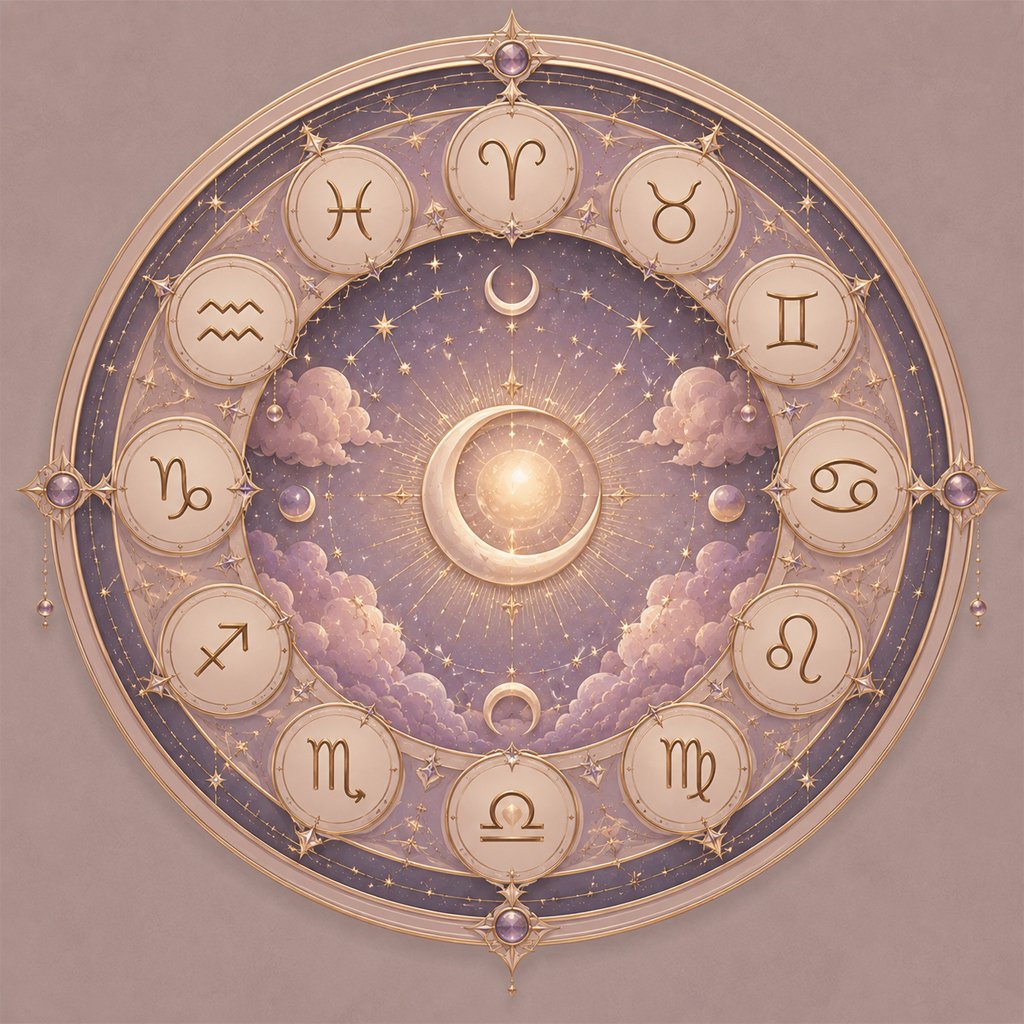
The Four Elements
Fire, earth, air and water — the temperament underneath every sign.
Why The Elements Come First
The four elements are the oldest layer of astrological description and still the most practical. Long before anyone was calculating chart angles, fire, earth, air, and water were being used to sort temperaments into four broad kinds, and the sorting has survived because it is genuinely useful: knowing that someone is a fire sign tells you more about how they will behave in a meeting than knowing their exact degree of Mercury.
Each element contains three signs, one from each modality, which is what keeps the category from flattening into a stereotype. Aries, Leo, and Sagittarius are all fire, but Aries starts, Leo sustains and Sagittarius adapts — three quite different people who happen to share a baseline of enthusiasm and directness.
Fire: Aries, Leo, Sagittarius
Fire is the element of initiative and self-expression. Its signs are motivated by possibility, they commit quickly, and they recover from setbacks faster than the other elements find plausible. In a group, fire signs are usually the ones who say the thing everybody was thinking, and they are rarely the ones nursing a grievance a week later.
The cost of that temperament is patience. Fire loses momentum when a project stops being new, and it can mistake enthusiasm for agreement — assuming that because an idea is exciting, everyone involved has signed up for it. Fire signs work best alongside someone who handles the middle stretch, which is usually an earth sign, and they are energised by air, which gives them new material to react to.
Earth: Taurus, Virgo, Capricorn
Earth is the element of consequence. Its signs measure ideas against the physical world — will this hold, what does it cost, who maintains it — and they are unimpressed by plans that sound good and collapse on contact with a calendar. This is the element most associated with reliability, and the reputation is earned.
Its weakness is inertia. Earth signs can keep a system running long past the point where it should have been replaced, simply because replacing it means accepting that the effort already spent is gone. They also tend to express care through practical action rather than words, which is easily misread by water signs as coldness when it is, in fact, the opposite.
Air: Gemini, Libra, Aquarius
Air is the element of perspective. Its signs think by comparing — this against that, one view against another — and they need conversation the way earth needs results. Air signs are usually the ones who can restate someone else's position more clearly than that person managed, which makes them good mediators and occasionally infuriating opponents.
The difficulty with air is distance. Analyzing a feeling is not the same as having it, and air signs sometimes reach for the analysis first because it is the more comfortable move. In relationships this reads as detachment, though what is usually happening is that the person is still working out what they think.
Water: Cancer, Scorpio, Pisces
Water is the element of atmosphere. Its signs register the emotional temperature of a room before they register what is being discussed, and they tend to remember how an exchange felt long after the content has faded. This makes water signs perceptive about people in ways that are difficult to explain to the other elements, and it makes them unusually good at knowing when something is wrong before anyone has said so.
The cost is permeability. Water absorbs what it is near, which is why these signs often need more solitude than their sociability suggests, and why they can carry a mood that did not originate with them. Water works well with earth, which provides a container, and finds fire either invigorating or exhausting depending on the day.
How The Elements Combine
The traditional pairings are easy to remember because they follow the physical logic of the elements themselves. Fire and air reinforce each other: air feeds fire, and in practice this means conversation generates enthusiasm and enthusiasm generates more conversation. Earth and water do the same at a slower tempo — water gives earth something to respond to, earth gives water a shape to settle into.
The cross-pairings take more work, which is not the same as being doomed. Fire and water is the combination most often described as difficult, because one processes outward and fast while the other processes inward and slowly. Earth and air struggle over what counts as progress: air has resolved a question once it has been thought through properly, earth has resolved it once something has actually changed.
None of this predicts whether two people will get on. Element compatibility describes the default translation cost between two temperaments, and couples who understand where that cost falls tend to pay it cheerfully. The signs that clash on paper are frequently the ones that pair well in life, precisely because neither person can coast on assuming the other works the way they do.
Using Elements In A Whole Chart
A full chart usually contains several elements, and the balance between them says more than any single placement. A chart heavy in earth and light in air describes someone practical who may under-communicate; a chart heavy in fire and water describes intensity in both directions, enthusiasm and sensitivity together, which can be a difficult combination to hold steady.
An element that is missing entirely is worth noticing, though not worth worrying about. It usually indicates a quality the person has had to build deliberately rather than inherit — and deliberately built qualities are often the more reliable ones. Someone with no earth in their chart is not incapable of being practical; they are simply unlikely to find it automatic, and may have developed a system for it that a Capricorn would never have needed to invent.
Read the balance before reading any single placement. It is the fastest way to see the shape of a chart, and it keeps the detail that follows in proportion.